
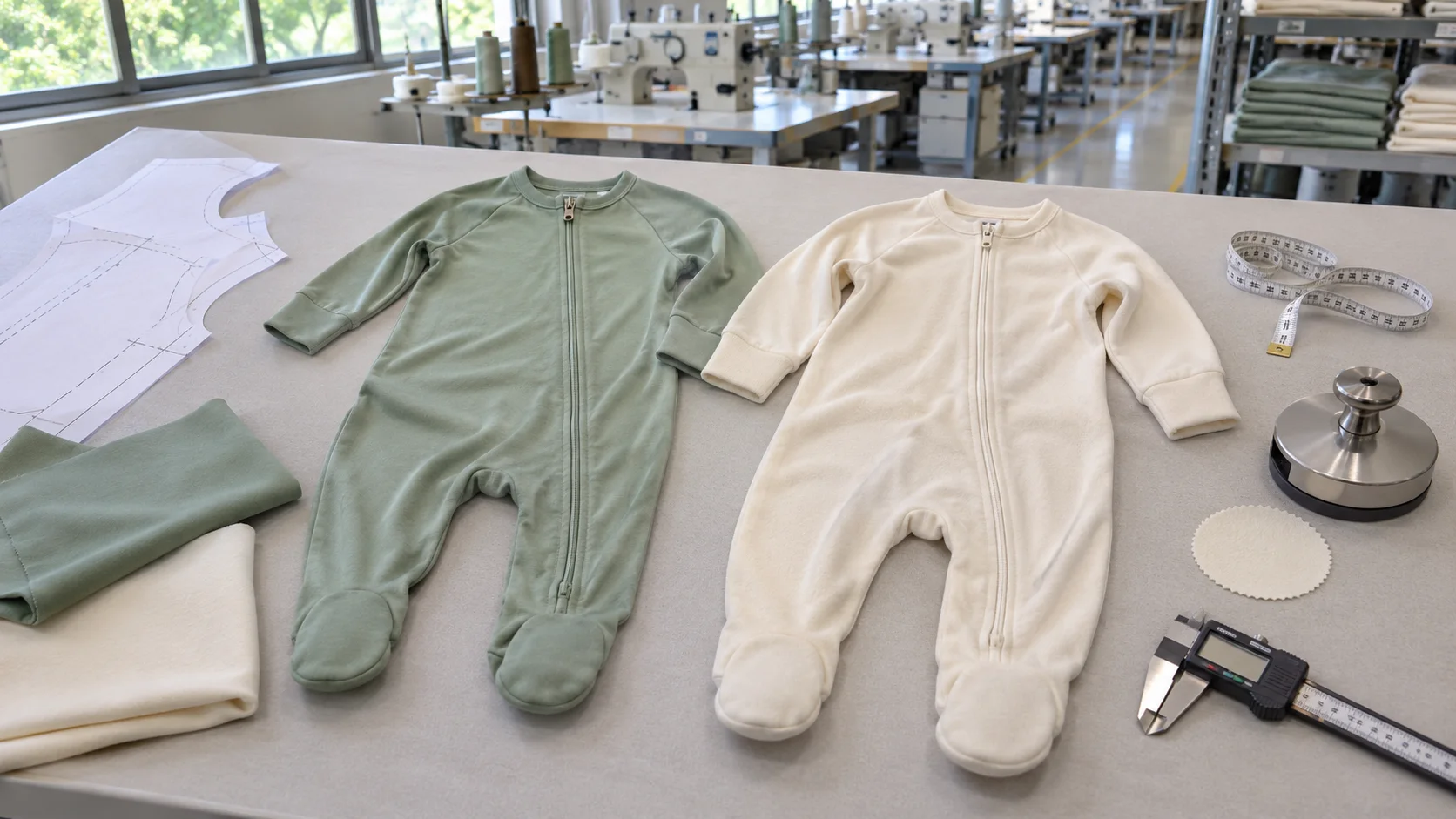
AI-generated factory-style editorial image; shown for process illustration.
For an infant sleepwear brand, the better material is not simply the softer fabric or the heavier fabric. The decision should connect fiber content, knit structure, finished weight, stretch, wash performance, garment construction, target climate, care instructions and the rules that apply in the destination market. This guide helps US brands compare bamboo viscose and organic cotton before approving a private-label sample and bulk-production standard.
Start with the actual fiber and fabric specification
Bamboo viscose is a regenerated cellulose fiber made using bamboo as the cellulose source. A common stretch-sleepwear direction is 95% viscose made from bamboo with 5% elastane, but buyers should confirm the exact composition, knit structure, finished GSM, width, stretch, recovery and finish. Organic cotton describes how the cotton is grown and processed under an applicable certification system; it does not by itself define jersey, rib, interlock, fleece or another construction. Ask for the full fabric specification and proposed US fiber-label wording before comparing prices.
How bamboo viscose performs in fitted baby sleepwear
Bamboo-viscose jersey is often selected for a smooth hand, fluid drape and flexible fitted silhouette. Elastane can support four-way stretch and recovery, which is useful in zipper sleepers and close-fitting pajama sets. Performance still varies by yarn, knitting density, finishing and color or print process. Evaluate opacity at the intended stretch, seam growth, surface pilling, colorfastness and dimensional change on a sewn, washed garment rather than relying on the fiber name alone.
How organic cotton performs in infant apparel
Organic-cotton knits can provide a familiar natural-fiber hand and a range of structures from light jersey to stable interlock and heavier rib. The correct option depends on the garment: a lightweight bodysuit, fitted pajama and structured daywear style do not need the same stretch or weight. Cotton without elastane may recover differently from a 95/5 bamboo-viscose blend, so compare fit, knee and elbow bagging, neckline recovery and shrinkage after the same care cycle. If a GOTS claim is planned, verify that the relevant certified supply chain and transaction documentation support the finished-product claim.
Use GSM as one specification—not a warmth or quality score
GSM measures fabric mass per square metre. It does not directly state thickness, opacity, thermal insulation, stretch recovery or quality, and it should not be treated as a TOG rating. Approximately 180–210 GSM may suit lighter garments, 220–240 GSM is often evaluated for core sleepwear, and 250–280 GSM may suit more substantial knit directions. These are development ranges, not universal rules. Compare swatches with the same composition and knit, then approve the selected fabric in the actual garment construction.
Measure shrinkage and dimensional stability before bulk approval
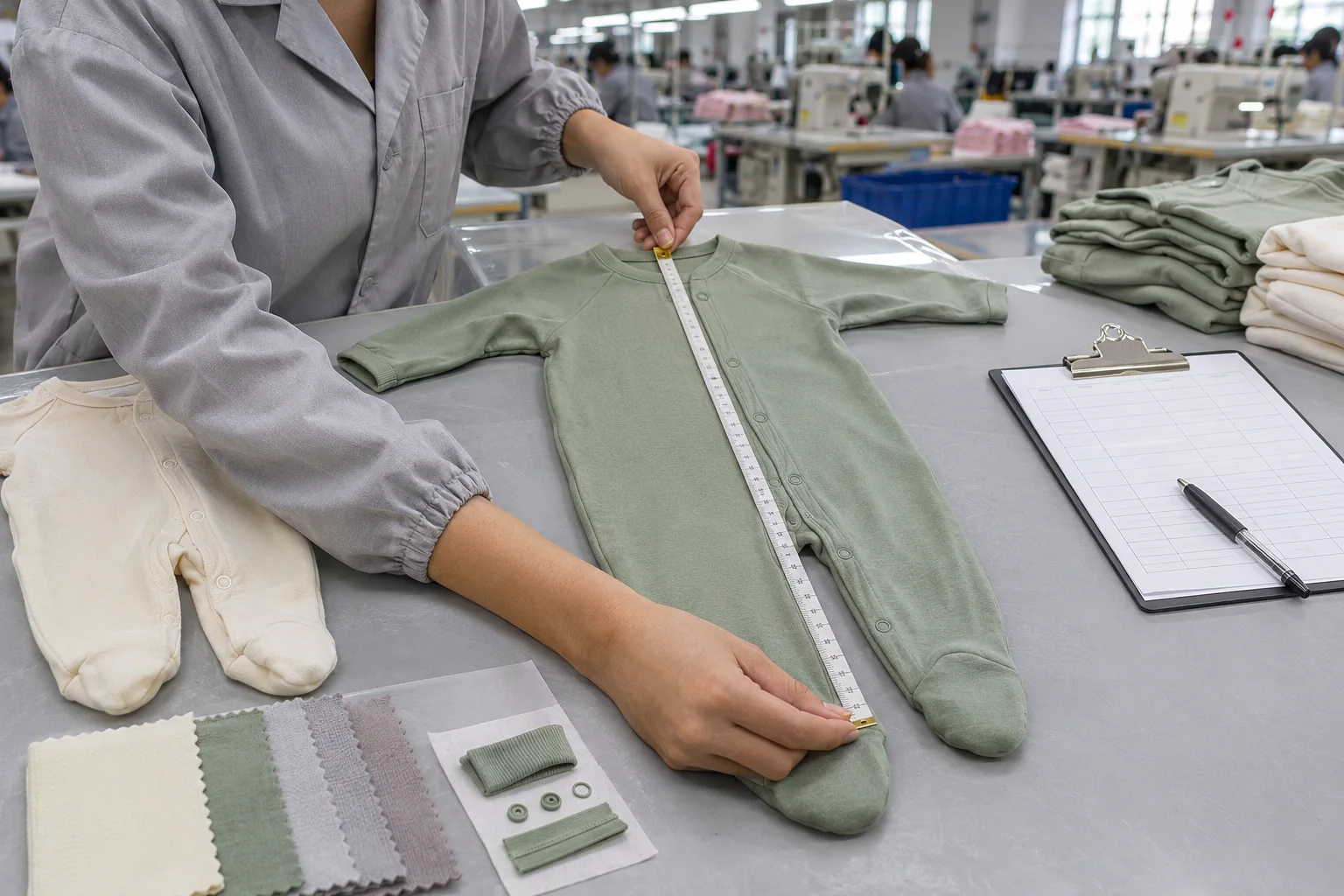
Do not assume one fixed shrinkage percentage for an entire fiber category. Mark the approved sample at agreed measurement points, record the pre-wash dimensions, wash and dry it according to the proposed care instructions, condition it, and measure again. Review body length, chest, sleeve, inseam, twisting, zipper waviness, cuff recovery and print appearance. The brand and manufacturer should record the test method, number of cycles and acceptable tolerance in the specification used for bulk production.
Plan US sleepwear compliance from product classification
For US sales, determine the product category, intended use and size range before finalizing fit and fabric. Children's sleepwear can be subject to the flammability requirements in 16 CFR Parts 1615 and 1616, while qualifying tight-fitting garments follow specific dimensional and labeling conditions. CPSIA planning can also include lead limits, applicable phthalate limits, tracking labels, testing by a CPSC-accepted laboratory where required, and a Children's Product Certificate issued by the responsible importer or domestic manufacturer. Confirm the applicable rules with your compliance professional and testing laboratory for the finished product; a fabric certificate alone does not establish full garment compliance.
Review chemical and organic claims accurately
OEKO-TEX STANDARD 100 testing can support harmful-substance due diligence for the certified article and scope shown on a valid certificate. GOTS can support organic textile claims when the relevant product and supply chain are certified. Neither name should be displayed merely because a supplier offers a similar material. Request current documentation, check the certificate holder, product scope and validity, and make sure marketing language matches what is actually covered.
Specify construction details that affect comfort and returns
For zipper sleepers, review zipper direction, puller size, backing, neckline guard, bottom stop coverage and how the tape behaves after washing. Confirm seam type, stitch security, thread stretch, cuff recovery and convertible mitten or foot details on the approved sample. Flat seams may reduce bulk in selected areas, but the most suitable construction depends on the pattern, fabric and stress point. Heat-transfer labels, woven labels and printed care labels also require legibility, placement and wash-durability review.
Build a controlled sample-approval package
A reliable approval package connects the final garment sample with its measurement chart, fabric swatch, composition, knit, GSM, color or print standard, zipper and trim references, label artwork, packaging instructions and approved care wording. Review fit, construction and closure operation before bulk production. For US-bound sleepwear, keep the compliance plan and required test samples connected to the same final specification so later material or fit changes do not go unnoticed.
Compare MOQ and quotation scope on the same basis
Selected RUIXING products can start from approximately 50 pieces per style, but custom knitting, dyeing, original prints, special trims, labels and packaging can change the practical minimum per style, color or print. A useful quotation should state the quantity and size split, fabric specification, included branding, packaging, sample scope, production basis and delivery term. Send your tech pack or reference garment, target market, size range, estimated quantities, required material direction and desired arrival date for a project-specific review.
Which material should your brand choose?
Choose bamboo viscose when a fluid hand, stretch-led fit and close-fitting premium sleepwear direction suit the product. Choose organic cotton when the planned knit structure, natural-fiber positioning and target garment performance are a better match. Many brands use both across different categories. The practical decision should come from side-by-side fabric swatches, sewn samples, wash measurements, fit review, documented claims and a compliance plan—not a universal claim that one fiber is always superior.
FREQUENTLY ASKED QUESTIONS
Questions buyers ask
Is bamboo viscose better than organic cotton for baby pajamas?+
Neither fiber is universally better. Bamboo viscose often supports a smooth, stretch-led fitted silhouette, while organic cotton is available in many stable knit structures. Compare sewn and washed samples against your fit, climate, care and compliance requirements.
What GSM should I use for bamboo baby sleepwear?+
GSM is only one variable. Many brands evaluate midweight fabrics for core sleepwear, but the correct choice also depends on knit structure, yarn, density, opacity, stretch, recovery, fit and climate. Approve a physical garment sample rather than selecting by GSM alone.
Does OEKO-TEX certification make a baby sleeper CPSIA compliant?+
No. OEKO-TEX certification can support harmful-substance due diligence for its stated scope, but US finished-product requirements can include flammability, lead, phthalates, tracking labels, third-party testing and CPC documentation depending on the product. Confirm the complete plan for the finished garment.
Who issues the Children's Product Certificate for a US order?+
The US importer or domestic manufacturer responsible for the product issues the CPC based on applicable test results and required product information. A foreign factory can support testing and documentation but does not replace the responsible certifier identified by CPSC rules.
What should I send for a bamboo or organic-cotton babywear quote?+
Send the garment reference or tech pack, target market, size range, estimated quantity by style and color, preferred fabric and GSM direction, artwork, labels, packaging, compliance needs and desired delivery date.